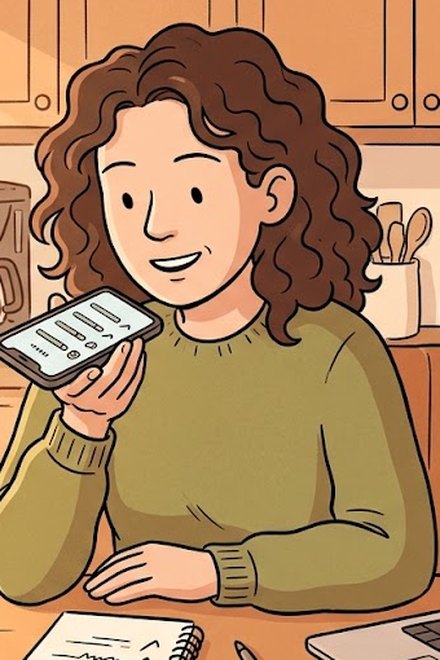
every day
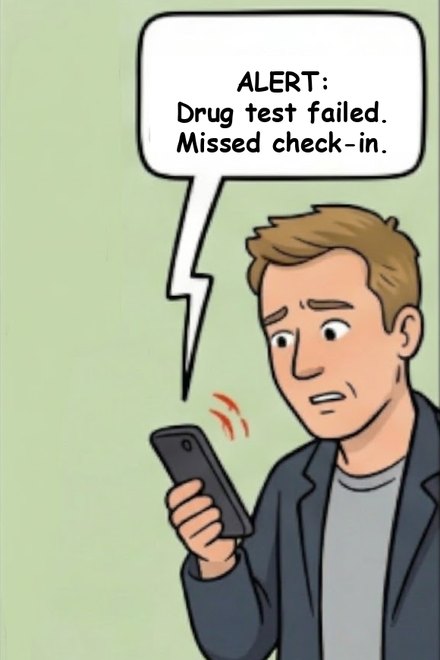
an alert is sent to
Sally’s support team
Treatment centers · Recovery coaches · Family · Justice · Sport · Health care
A daily emotion and behavior check-in, random drug and alcohol testing — and an early warning for everyone who supports them.
every day
Each day the person answers a short check-in by phone, web or smartphone. Random drug and alcohol tests are scheduled automatically. When something looks wrong — a missed check-in, distress detected in the voice journal, high cravings, a failed test — the right people can act in real time, when help is most needed.
Used every day at ABC Recovery Center since 2018 · 675 clients
Schedule a demoWho we are
HandHeld Monitoring was built with ABC Recovery Center in Palm Desert, California, for its own clients, and has run there every day since 2018. We have also served many sober coaches and families. We are four people: a treatment-center leader, an addiction-medicine physician, a researcher in emotion and addiction, and an operations lead who sets up and supports every center we work with.
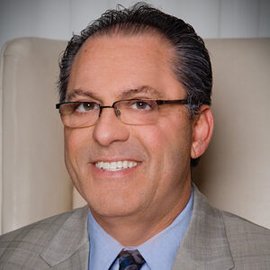
David M. Grey
Chairman of ABC Recovery Center. Decades running addiction treatment.
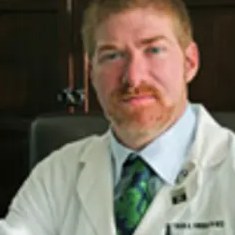
Dr. Matthew Torrington, MD
Addiction-medicine physician. Medical Director at CRI-Help, Los Angeles.

Dr. Edward (Ted) Hill, PhD
Published researcher in emotion and substance use. Designed and built the platform.

Jonathan James
Sets up each center, trains the staff and is the person you call.
The client at the center
One client, everyone who supports them, on the same page
Compliance and well-being involve many people.
Click or tap any role to see what it gets.
The client
Daily check-in, voice journal, random tests.
Counselor & caseworker
Mood & craving trends, same-day alerts.
Physician & nursing
Medication adherence, test schedule & results.
Family & loved ones
Wellbeing updates, with the client’s consent.
Sober living
Resident check-ins and test results.
Court & probation
Compliance records, missed & failed tests.
Program leadership
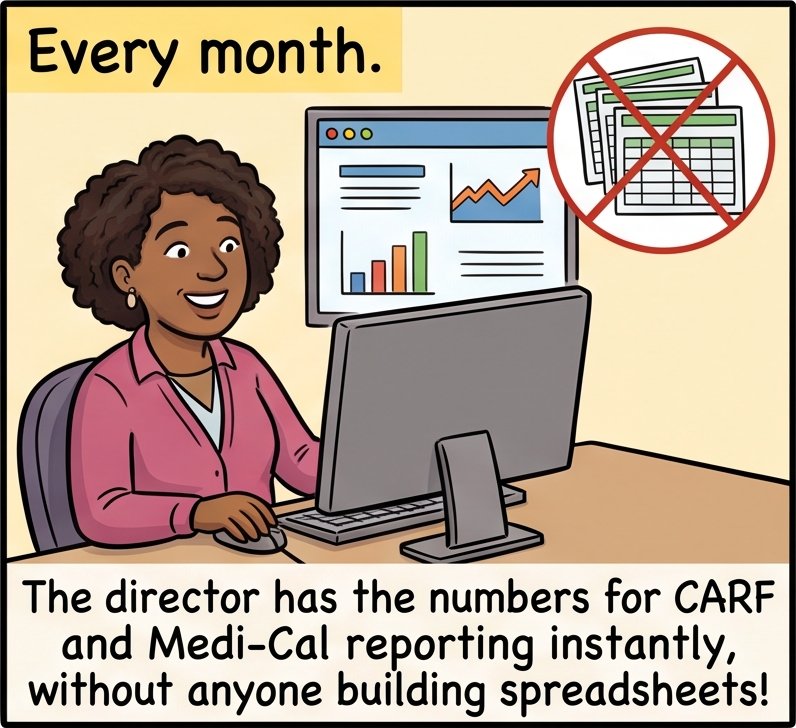
Outcomes, CARF & Medi-Cal reporting.
What actually happens
A week with HandHeld Monitoring
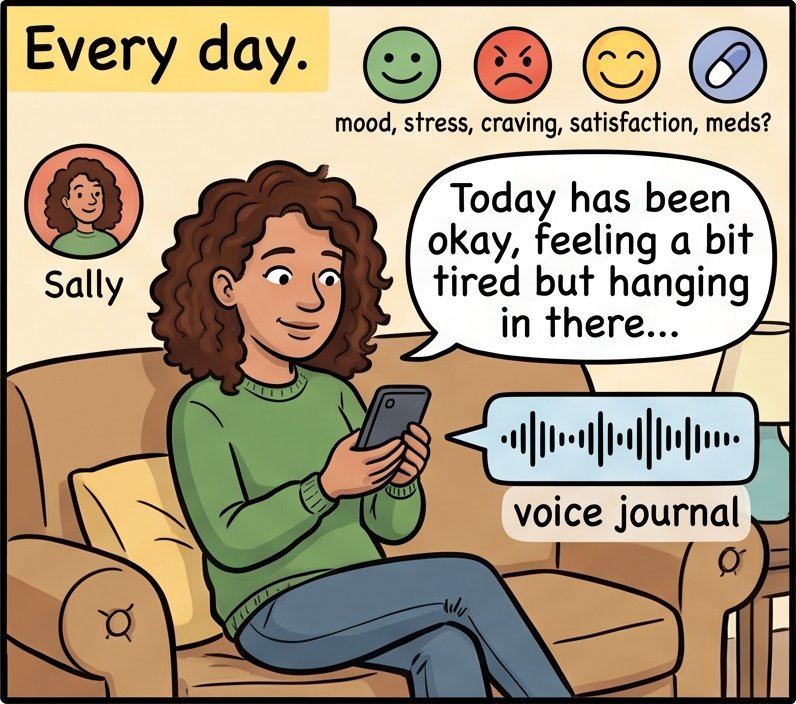
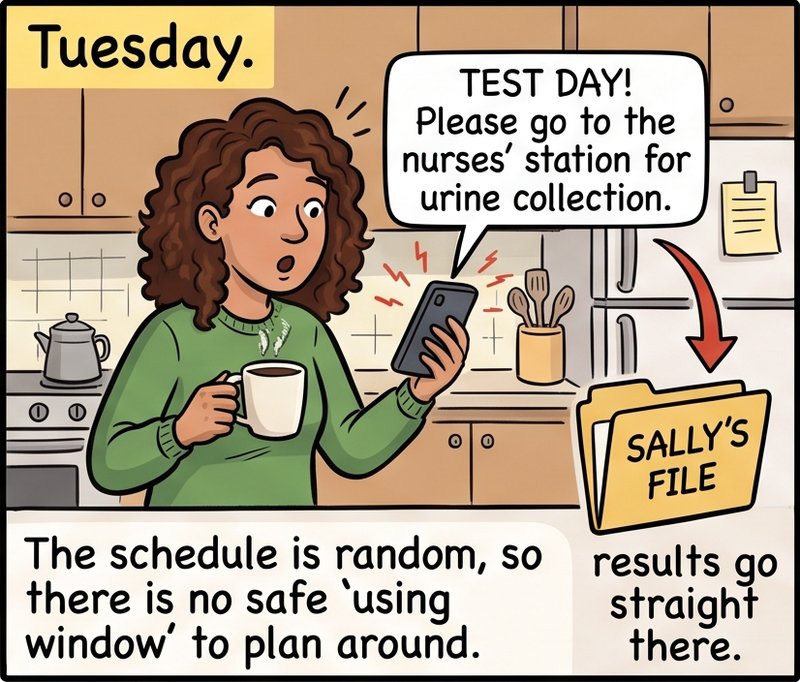
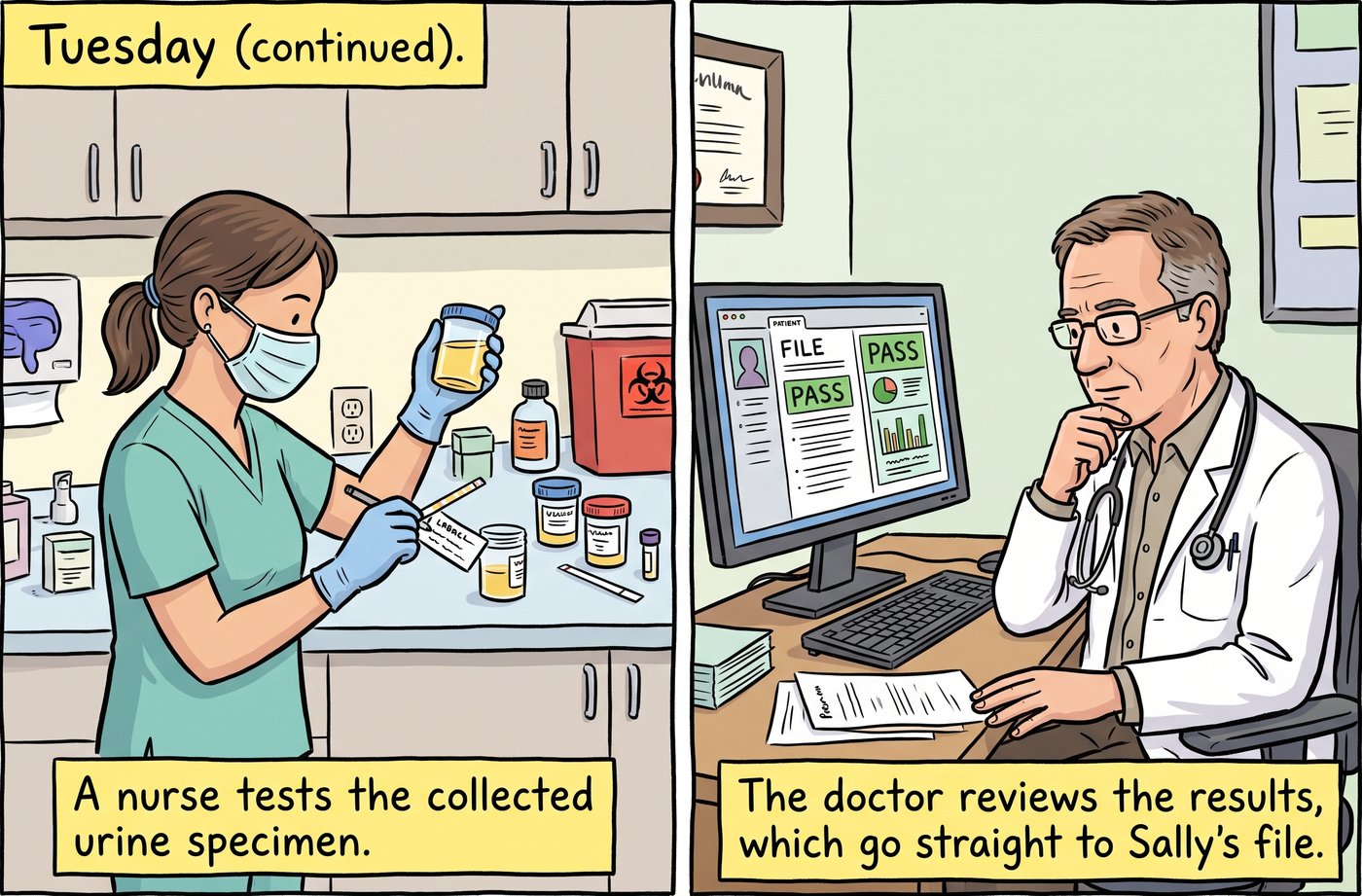
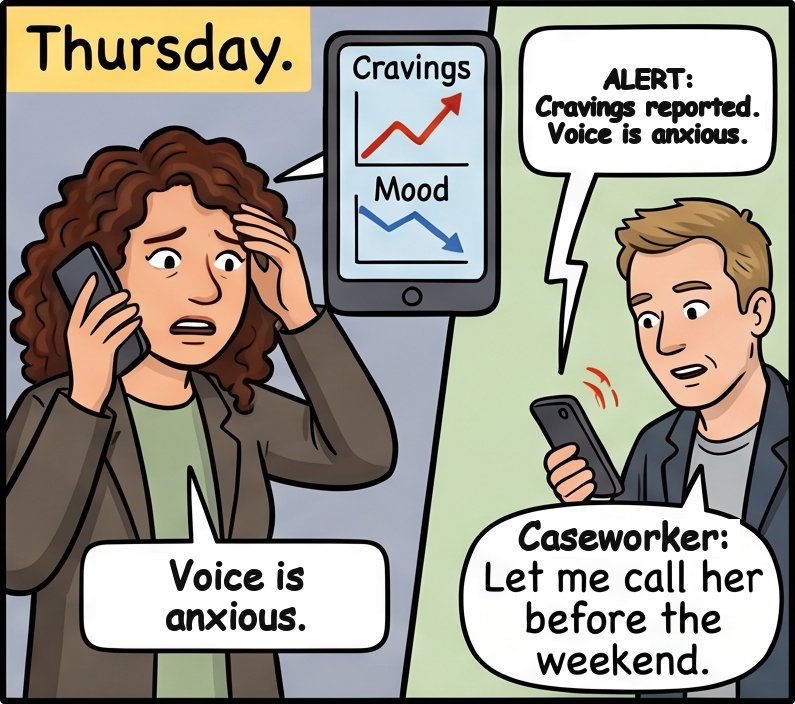
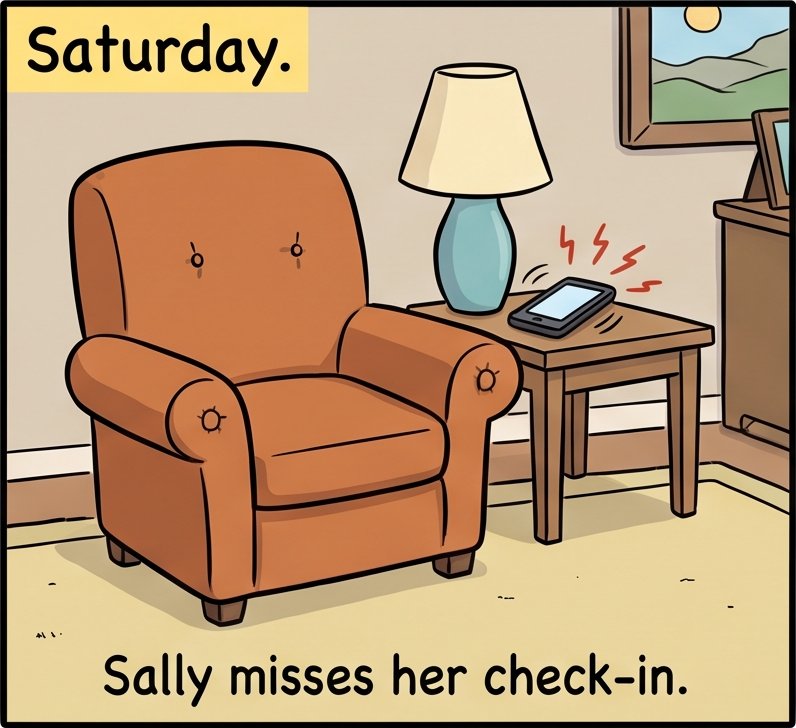
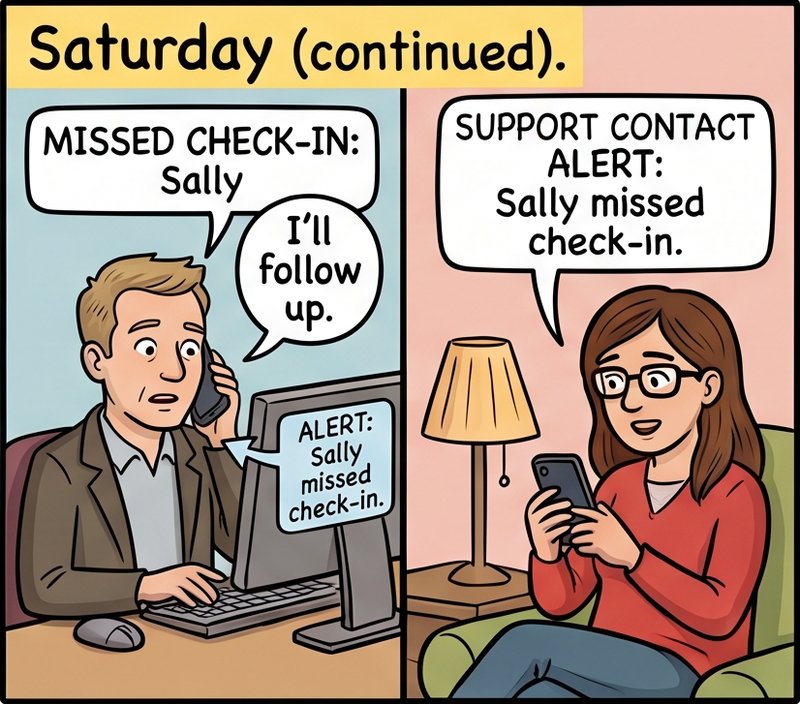
Example: Sally is a client six weeks into an outpatient program.
How we work with your center
We set you up
We configure your accounts and testing schedules and train your staff. No setup fee.
You enroll clients
Staff members register each client with their substance use profile, prescriptions, and assign support staff.
It runs every day
Check-ins, random tests and voice journals run on their own. Text messages in real time. Testing is done at your nursing station, or fully remotely through LabCorp.
Act in real time
Alarms go to the people who should act. Tickets are assigned and tracked to completion. Dashboards and statistics give you the big picture and trends on your clients and your service.
Designed to be admissible for evidentiary use
Every check-in and test: completed, missed, passed or failed. Medical Review Officer certified test results. Authenticated SMS transmission records.
Questions
Frequently asked questions
What is HandHeld Monitoring?
HandHeld Monitoring is a daily check-in and early-warning system for addiction treatment centers. Each day clients answer a short check-in by phone, web or smartphone and record a voice journal, and random drug tests are scheduled automatically. When something looks wrong (a missed check-in, high cravings, distress in the voice journal, a failed test) the right people are alerted and can act in real time. It was built with ABC Recovery Center in Palm Desert, California, and has run there every day since 2018.
Who is HandHeld Monitoring for?
It was built with an addiction treatment center, and the same daily check-in, random drug and alcohol testing and same-day alerts are used by:
- Treatment centers: counselors, caseworkers, physicians, nursing staff and program leadership
- Sober and recovery coaches, between calls with their clients
- Concerned family members, when an adult loved one agrees to be monitored
- Probation, drug courts and pretrial programs
- Family court and parenting-time agreements
- Athletes, teams and clean-sport programs
- Medication management by physicians, pharmacists and nurses
- Psychotherapy and counseling, between sessions
- Professional health and return-to-work programs for nurses, physicians, pilots and other safety-sensitive jobs
Nothing is shared without the person’s consent, and each person sees only what their role needs. See all applications.
How does the daily check-in work?
Once a day, by phoning in or with the mobile or web app, the client answers five questions: mood, stress, craving, life satisfaction, and whether they took their medication. Then they record a short voice journal in their own words. It works on any phone, including a basic or government-issued one.
How does random drug testing work?
Test days are scheduled at random, and the client is told that morning, so there is no safe “using window” to plan around. A nurse tests the specimen at the center’s nursing station, or testing is done fully remotely through LabCorp. The result goes straight into the client’s file for the physician to review.
Who gets alerted, and when?
When a client misses a check-in, reports a jump in cravings, sounds distressed in the voice journal, or misses or fails a test, their caseworker gets a text. The client’s chosen support contact can be told as well. Staff can act in real time, when help is most needed.
Can family members get updates?
Yes, with the client’s consent. The client chooses a support contact, such as a sister, a partner or a parent, and decides what that person is told. If a check-in is missed or something looks wrong, they can act early, when help is most needed. Nothing is shared without the client’s consent.
Can it be used for drug court or probation?
Yes. HandHeld Monitoring keeps a dated record of every check-in and every test: completed, missed, passed or failed. Urine tests go to LabCorp, a laboratory certified by SAMHSA under the HHS National Laboratory Certification Program, with a documented chain of custody and review by our Medical Review Officer. With the client’s consent, the compliance record can be shared with the court or the probation officer.
Is HandHeld Monitoring covered by Medi-Cal?
Yes. In California it is 100% reimbursed by Medi-Cal. It becomes part of the treatment services the center already bills to Medi-Cal. ABC Recovery Center has included it in its Medi-Cal budget with Riverside County since 2018, so the net cost to the center is $0. Billing codes and claim steps differ from county to county, and we help map HandHeld Monitoring to your existing county contract.
Which treatment centers qualify for Medi-Cal reimbursement?
In California, Medi-Cal pays for substance use disorder treatment through Drug Medi-Cal, in most counties as the Drug Medi-Cal Organized Delivery System (DMC-ODS). To bill it, a program needs a state license or certification for its level of care, Drug Medi-Cal certification from the Department of Health Care Services (DHCS) for each site, and a provider contract with its county’s DMC-ODS plan. Most centers that already treat Medi-Cal clients have all three.
How long does it take to set up?
Days, not months. We configure your accounts and testing schedules and train your staff, with no setup fee and no long-term contract. Then a caseworker registers each client with their substances, prescriptions and support contacts, and the check-ins, random tests and voice journals run on their own.
What results has it shown?
At ABC Recovery Center, 675 clients were monitored from September 2018 to November 2026. Of the 623 clients monitored to January 2026, 70% completed treatment, against 48% nationally, and clients stayed 85 days on average, against 79 nationally.
See it with real data
A 30-minute call with Jonathan: we walk through the dashboard using anonymized results from ABC Recovery Center.
Schedule a demo